Mirathor Quellith
Esports has grown from casual online matches into a competitive industry across the globe, including New Zealand. Today, professional Kiwi players compete for prestige, multi-million-dollar prize pools and sponsorships in front of massive live and online audiences. These sponsorships often involve various industries from tech, finance and even iGaming!
Just imagine your team receiving support from the most modern casinos — this provides access to cutting-edge gadgets and equipment for competitions.
In this context, it is useful to familiarize yourself with the latest NZ casino sites — reviewing these platforms helps you understand which casinos offer convenient conditions and interesting opportunities for users, without delving into the gaming process itself, but only evaluating functionality and reliability.
This article looks at the 10 leading esports games currently shaping the competitive landscape, based on tournament scale, viewership, and long-term stability. These titles represent the biggest esport games and continue to define what high-level gaming looks like worldwide.
1. League of Legends
League of Legends stands at the center of modern esports. Developed by Riot Games, it operates one of the most structured competitive systems in gaming, with regional leagues feeding into the annual World Championship.
The LoL World Championship consistently records the highest viewership figures in esports history. Riot’s focus on production quality, player narratives, and international rivalries has helped LoL remain one of the most popular esports for over a decade. Its ecosystem supports thousands of professional players, making it one of the biggest competitive games ever created.
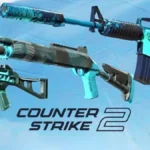
2. Counter-Strike 2
Counter-Strike is built on gaming fundamentals: precision, teamwork, and strategy. With the transition to Counter-Strike 2, the franchise has modernized while preserving its competitive core.
Major tournaments such as Intel Extreme Masters and Valve-sponsored Majors attract millions of viewers. The game is easy to learn and has a high skill ceiling that keeps it firmly among the biggest esport games, especially in Europe and North America.
Dota 2
Dota 2 is known for complexity and scale. Its annual flagship event, The International, helped establish esports as a serious industry by introducing massive prize pools, like the record $40 million in 2021 (TI 11).
Matches are highly strategic, often lasting over 40 minutes and requiring deep coordination. Despite a smaller casual audience, The first player simulator MOBA remains one of the biggest competitive games due to its elite player base and dedicated fan following.
4. Valorant

Valorant combines tactical shooting with character abilities, creating a hybrid competitive format that is popular in the New Zealand esports scene. Riot Games supports the scene through the Valorant Champions Tour, which mirrors traditional sports leagues.
The game has grown rapidly since launch and now ranks among the most popular esports, particularly with younger audiences. It’s clear ruleset and structured competition make it a stable long-term esport.
5. Fortnite
Fortnite is one of the biggest Battle Royale games our there. They introduced a new approach to competitive gaming. Open qualifiers, solo events, and creative formats which allow unknown players to rise quickly.
The Fortnite World Cup is notable because it awarded the largest prize money ever to a single participant, when Kyle “Bugha” Giersdorf won $3 million, proving what Zoltan Andrejkovics said:
“The only boundaries for you are those you place in yourself.”
The Fortnite World Cup demonstrated how large individual prizes could attract mainstream attention. While its competitive structure changes often, the game remains one of the biggest esport titles due to reach and cultural influence.
6. PUBG Mobile
PUBG Mobile played a key role in expanding esports beyond PC and console markets. Its competitive scene thrives in Asia, the Middle East, and parts of South America.
Global championships regularly attract millions of viewers, proving mobile esports can operate at the same scale as traditional platforms. This success secures PUBG Mobile a spot in the top 10 esports games worldwide.
7. Mobile Legends: Bang Bang
Mobile Legends is one of the most successful mobile esports titles ever released. Short match times and simple mechanics make it easy to follow, while high-level play remains highly competitive.
Major tournaments regularly draw millions of viewers, particularly in Southeast Asia. Its consistent tournament schedule keeps it among the most popular esports year after year.
8. Apex Legends

Apex Legends brought speed and movement into competitive battle royale play. Teams must balance aggression with positioning, making matches fast and unpredictable.
Its global championships continue to grow, placing Apex among the biggest competitive games in the shooter category. The format rewards both mechanical skill and smart decision-making.
9. Rainbow Six Siege
Rainbow Six Siege remains one of the best game classics and emphasizes tactical gameplay and environmental destruction. Each match requires preparation, coordination, and precise execution.
Ubisoft hosts an annual Rainbow Six Siege tournament called the “Siege Invitational” with a prize pool of about $3 million. Siege’s steady viewership and structured leagues keep it within the top 10 esports games globally.
10. Clash Royale
Clash Royale proves that esports doesn’t need long matches or complex setups. Games are short, intense, and easy to watch.
Its competitive resurgence shows the strength of mobile esports in structured environments. Clash Royale earns its place among the biggest esport games by combining accessibility with skill-based competition.
Conclusion
Esports continues to grow through structure, competition, and global reach.
And like Gary Gygax said, “Games give you a chance to excel.”
The top 10 esports games listed represent the strongest competitive ecosystems in the industry today. From large-scale PC tournaments to mobile championships with millions watching, these biggest competitive games show that esports is no longer emerging but established.