Mirathor Quellith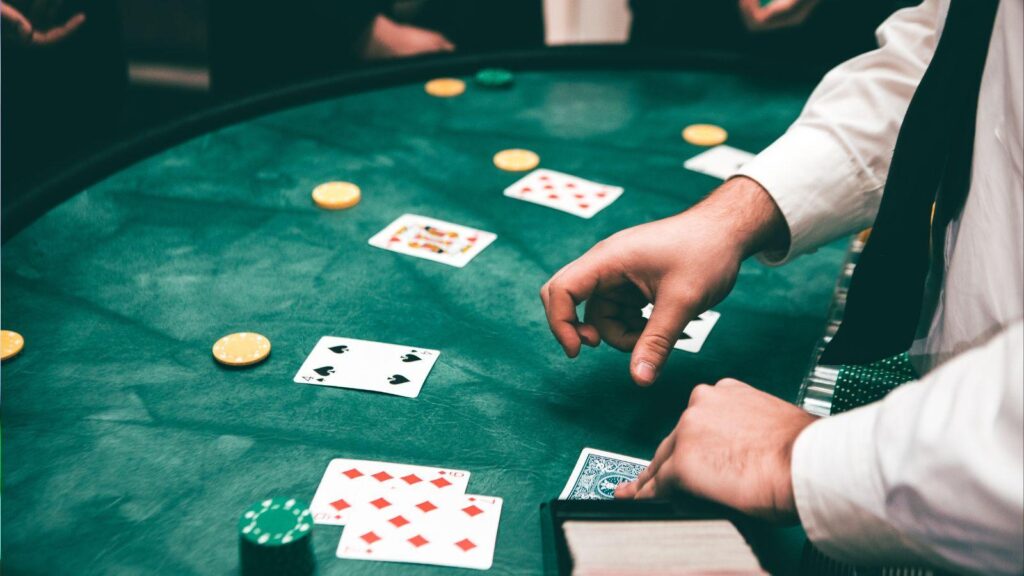
Blackjack is the only widely available casino game where the mathematically correct decision for every situation has been worked out and published. You can bring a strategy card to the table, and casinos allow it. Yet the majority of players still make avoidable errors every session. Understanding why the strategy is what it is — not just memorizing the moves — is the difference between following rules and actually playing better.
Why the House Edge Is Different Here
Most casino games have a fixed house edge that no decision-making can alter. Blackjack is structured differently. The player acts before the dealer, creating a genuine decision space, and the rules around drawing, standing, doubling, and splitting give those decisions real mathematical consequences.
Against favorable rules, basic strategy reduces the house edge to somewhere between 0.4% and 0.6% — assuming optimal decisions on every hand. It is not a system for winning; it is the complete set of decisions that minimizes the house advantage given what is visible at the table.
Poor decisions raise that edge quickly. Failing to double on 11, not splitting aces, hitting when you should stand — each error shifts the math, and over hundreds of hands the mistakes compound.
The Logic Behind the Hard Totals
The dealer must hit until reaching 17, with no discretion. A 5 or 6 showing means a high bust probability when forced to draw; a 10 or ace means they are likely already strong. Basic strategy exploits this: stand on weaker totals when the dealer shows a bust card, push harder when they are strong.
Standing on 16 against a dealer 7 feels wrong because 16 is a bad hand. The strategy says stand anyway — hitting 16 is statistically worse, and the discomfort does not change the math.
What the Strategy Chart Actually Tells You
A basic strategy chart maps every player’s hand against every possible dealer upcard, producing one of five instructions: hit, stand, double down, split, or surrender. Here is how the main categories break down:
|
Player Hand |
Dealer Shows 2–6 |
Dealer Shows 7–Ace |
|
Hard 8 or less |
Hit |
Hit |
|
Hard 9 |
Double (vs 3–6), else Hit |
Hit |
|
Hard 10–11 |
Double (most cases) |
Double or Hit |
|
Hard 12–16 |
Stand (vs 2–6), Hit otherwise |
Hit |
|
Hard 17+ |
Stand |
Stand |
|
Soft 17 (A-6) |
Double or Hit |
Hit |
|
Soft 18 (A-7) |
Double (vs 3–6), Stand (vs 2,7,8) |
Hit (vs 9,10, A) |
|
Pairs: Aces / 8s |
Always split |
Always split |
|
Pairs: 10s / 5s |
Never split |
Never split |
Soft hands are where players lose the most value. A soft 18 against a dealer 6 is a doubling opportunity most players treat as a standing hand — the difference adds up across sessions.
Where Live Blackjack Changes the Calculation
Online live dealer blackjack has brought the game to players who would never sit at a physical table. The strategy translates directly — the math does not change because cards are dealt on camera.
What changes is the rule set. The number of decks, whether the dealer hits soft 17, and the doubling restrictions all affect the precise edge. A chart calibrated for six decks produces slightly different decisions than one for a single-deck game — using the right version matters.
Serious players prepare before they sit down — checking the rule set, confirming which version of the strategy applies, and choosing a platform that makes those details easy to find. That last point matters more than it sounds: vulkan bet casino displays game rules before buy-in rather than tucked away where no one looks, which makes the preparation straightforward rather than a scavenger hunt.
Getting the Strategy Into Practice
Reading a chart and using it fluently under table conditions are different things. The practical path is repetition away from the table until the main categories are automatic. A few decisions are worth fixing before anything else:
- Always split aces and eights regardless of the dealer’s upcard — the highest-value rule in the game and the most commonly skipped.
- Never take insurance — a side bet with a house edge of roughly 7% that has no connection to whether your hand wins.
- Double on 11 against any dealer upcard except an ace — the expected value is positive, and most players underuse it.
- Treat soft hands as flexible totals with a doubling option, not fixed numbers to stand or hit mechanically.
Basic strategy does not make blackjack a winning game — the house edge remains. What it does is give you the best possible version of a game that already offers one of the lowest edges available. Playing it correctly is the floor; everything beyond it is variance.