The Hidden Cost of Perfect Product Videos (And Why “Good Enough” Wins in 2026)
 Mirathor Quellith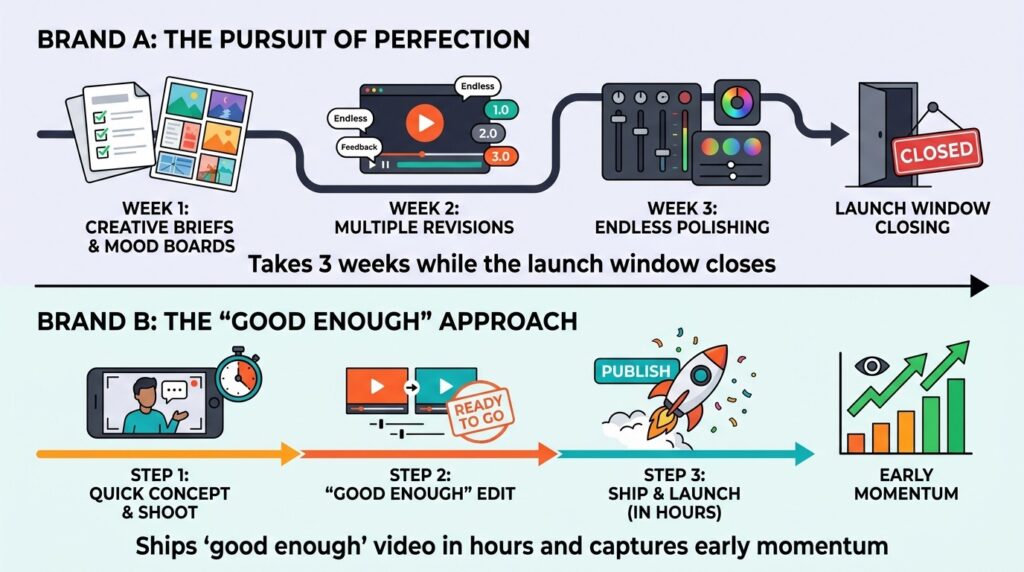
There’s a paradox at the heart of modern e-commerce marketing: the brands obsessing over perfect product videos are often the ones falling behind.
It sounds counterintuitive. Shouldn’t higher production values lead to better results? In theory, yes. In practice, the math tells a different story.
The Perfectionism Trap
Here’s what happens:
Product launches. Marketing wants video. Creative brief circulates. Revisions pile up. Mood board expands. Three weeks later, the shoot finally happens.
By the time the video goes live, the product’s been selling on static images alone. Algorithm made its assessment. Early reviews posted. Launch window partially closed.
The video looks beautiful. It’s also too late.
The opportunity cost compounds:
- Week 1: Lost momentum during the critical launch phase
- Week 2: Competitors already running their own (faster) content
- Week 3: Platform algorithms have moved on to newer listings
This happens to thousands of brands every month.
The Volume Advantage
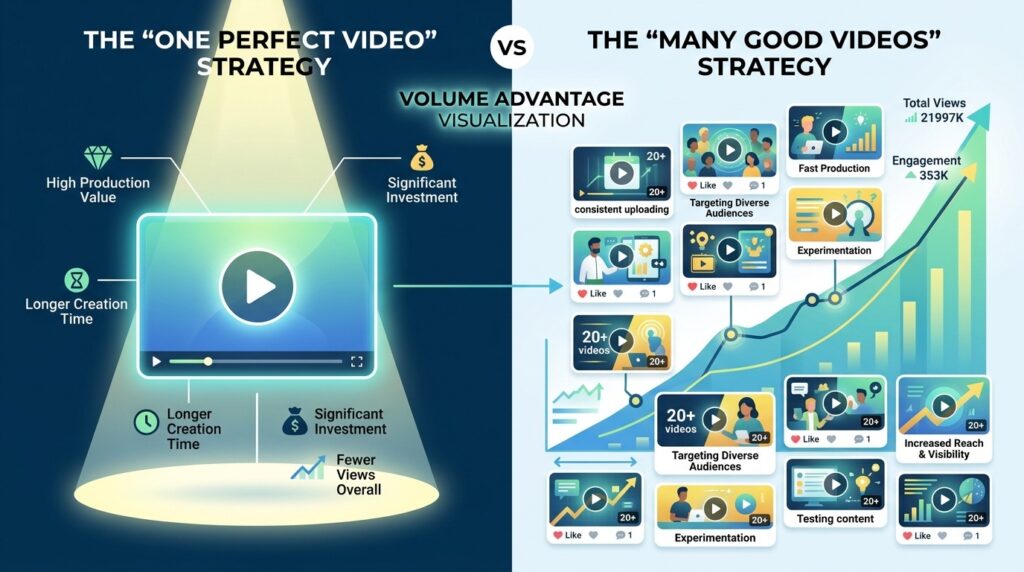
Product video AI tools shift strategic calculus from “one perfect video” to “many good videos.”
Powered by text-to-video and image-to-video models like HappyHorse 1.0, production time drops from weeks to minutes. Consider what becomes possible:
🎯 Testing creative angles: Does your audience respond better to benefit-driven scripts or lifestyle storytelling? With traditional production, you pick one and hope. With AI product video generation, you test both.
🎯 Seasonal variations: Holiday messaging, sale announcements, back-to-school angles. Each requires fresh creative. Product avatars make seasonal refreshes practical rather than prohibitive.
🎯 Platform-specific optimization: TikTok wants one tone. Amazon wants another. YouTube Shorts needs something different. Creating native versions for each platform stops being a budget question and starts being a checklist item.
🎯 Localization at scale: A product avatar can deliver the same script in Spanish, Mandarin, Arabic, or Portuguese without coordinating international shoots.
None of this requires perfection. It requires consistency.
When “Good Enough” Is Actually Better
“Good enough” sounds negative. In performance marketing, it’s valuable: content that hits the effectiveness threshold without overshooting into diminishing returns.
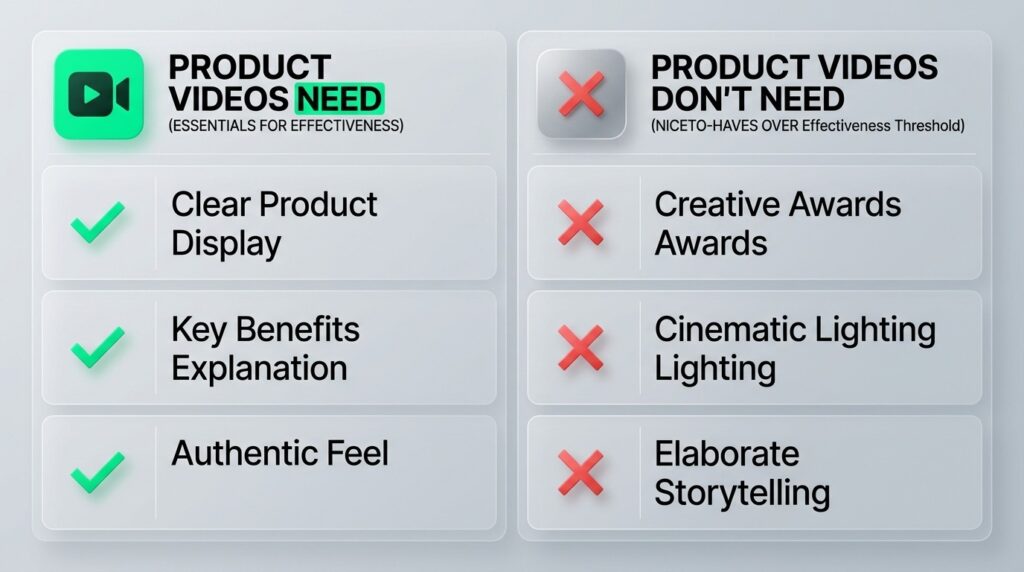
A product video needs to:
- Clearly show what the product is
- Explain key benefits or use cases
- Feel authentic rather than overly produced
It does not need to:
- Win creative awards
- Feature cinematic lighting
- Include elaborate storytelling
Product avatars—built on motion synthesis technology like Seedance 2.0—excel at delivering the former list with lifelike motion quality. They present products clearly, explain features naturally, and feel accessible rather than aspirational. For most purchase decisions, especially mid-funnel consideration or late-funnel comparison, that’s exactly what performs.
The Creative Team’s New Role
This shift doesn’t eliminate the need for creative expertise. It redirects it.
Instead of spending three weeks perfecting one video, creative teams using AI product video tools spend their time on higher-leverage activities:
Strategic planning: Which products need video support first? What messaging angles should we test? How should we sequence content across the customer journey?
Script optimization: The words still matter. A well-written 30-second script delivered by a product avatar outperforms a poorly written one every time.
Performance analysis: With more videos in market, there’s more data to analyze. What patterns emerge? Which avatar styles resonate with which demographics? How does video placement affect conversion?
High-touch moments: Flagship launches, brand campaigns, and tentpole moments still deserve custom production. AI handles the long tail.
This reallocation often delivers better results than concentrating all resources on a few perfect pieces.

The Uncomfortable Truth About Audiences
Consumers don’t watch product videos the way marketers wish they would.
Average watch time for product videos on social platforms: 6-8 seconds.
Time spent evaluating lighting quality or composition: effectively zero.
Audiences scan for information: Does this solve my problem? Does it look like what I need? Can I trust it?
A clear, straightforward product video from a product avatar answers those questions as effectively as a $15,000 studio production, at least for the vast majority of products and purchase contexts.
The exceptions exist. Luxury goods, high-consideration purchases, and brand-building campaigns benefit from elevated production values. But they represent a fraction of total e-commerce transactions.
Making the Shift
Adopting product video AI doesn’t mean abandoning quality standards. It means acknowledging that speed and volume have become quality factors themselves.
A brand with one perfect video and nine product pages without video loses to a brand with ten good-enough videos across all its listings.
The market rewards presence, consistency, and adaptability. Product avatars deliver all three without the traditional trade-offs of time and budget.
For teams still locked in perfectionist workflows, the question isn’t whether AI-generated videos look as good as traditional production. The question is whether waiting for perfect is costing more than it’s worth.
In 2026, the answer is increasingly clear.