Mirathor Quellith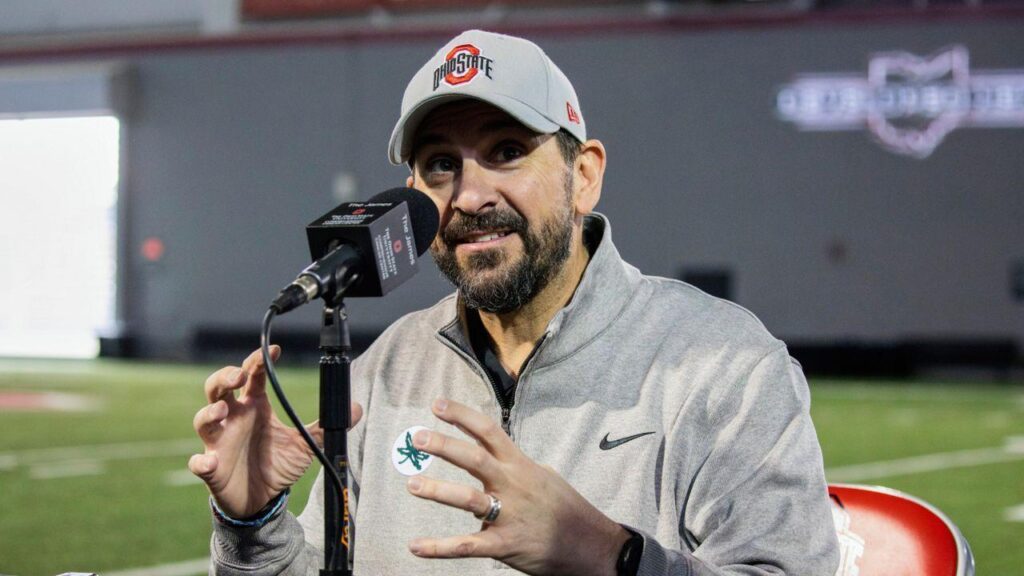
In February 2026, Matt Patricia signed a three-year contract extension to remain at Ohio State as defensive coordinator. The deal made him the highest-paid coordinator in college football at $3.75 million annually. What got less attention than the number was the decision behind it.
Patricia had options. NFL teams called. He took the meetings, listened to the pitches, and considered what a return to the league would look like. He’d spent 20 years in the NFL, won three Super Bowls with the Patriots, and had no shortage of credibility with professional front offices.
He stayed in Columbus anyway.
“There were opportunities in college, there were opportunities in the league, for sure,” Patricia said. “But we had just moved, and family is a big part of it.”
That answer is worth taking seriously. Patricia isn’t someone who needed Ohio State as a lifeline. He chose it over alternatives, and understanding why says something meaningful about what Ryan Day has built in Columbus.
The Family Factor
Patricia has moved his family repeatedly throughout a coaching career that spanned New England, Detroit, Philadelphia and back to New England. By the time he arrived in Columbus in February 2025, he was starting over in yet another city. What happened next apparently surprised him.
“We’ve just had an unbelievable experience settling into Columbus,” Patricia said. “Everybody’s been so nice and welcoming and it feels like home. It’s a big deal for us to be in a place where everybody’s happy. It’s really important.”
That kind of stability carries real weight for a coach who has spent decades living out of hotel rooms and relocating his family around the NFL calendar. Columbus gave his family roots. Leaving after one season — even for an NFL opportunity — would have meant uprooting everything again. The extension wasn’t just a professional commitment. It was a personal one.
The Football Factor
The family piece explains why he didn’t want to leave. The football piece explains why he didn’t need to.
Patricia spent his year away from coaching in 2024 studying the college game closely, and what he saw changed his thinking. The expanded College Football Playoff, in particular, caught his attention. The bracket format, the genuine stakes, the chance for any team that gets in to make a run — it mirrors exactly what he valued about the NFL postseason.
“Studying it in the offseason, college football to me really felt like, ‘Hey, that’s where I want to be,'” Patricia said. “It kind of just called to me.”
Ohio State specifically offers something few programs can match: playoff-level competition almost every season. The Buckeyes have made the College Football Playoff in five of Day’s eight seasons as head coach. For a coordinator who thrives under pressure and big-game circumstances, that environment is a feature, not a consolation.
His first season proved the fit was real. The 2025 Buckeyes led the nation in scoring defense, allowing 8.2 points per game during the regular season. Patricia finished as a Broyles Award finalist. NFL scouts reviewing Ohio State’s film described the tape as “so clean” — a phrase Patricia has cited repeatedly this spring as a benchmark for the standard he wants to maintain.
The Challenge Ahead
Staying was one thing. Now Patricia has to prove the 2025 defense wasn’t a one-year anomaly.
The 2026 rebuild is steeper than last year’s. Caleb Downs, Sonny Styles, Arvell Reese and Kayden McDonald are all gone, four projected first-round picks who defined what Patricia’s system looked like at its best. Eight starters have departed for the second consecutive year, and this group leans more heavily on transfer additions than the last one did.
Spring practice has given Patricia a working sense of what he has. Earl Little Jr., the Florida State transfer who led the Seminoles with 76 tackles and four interceptions in 2025, has drawn early praise from Ryan Day and shed his black stripe among the first players this spring. Payton Pierce has impressed linebackers coach James Laurinaitis as a natural in the middle. Qua Russaw has flashed pass-rush potential opposite returning starter Kenyatta Jackson on the edge.
Patricia’s approach to the rebuild mirrors how he approached year one — fundamentals before scheme, confidence before complexity. “If you throw all of it at them at once, sometimes you’re doing a bunch of different things but you’re not real confident in one thing,” he said recently. “The key is to get them confident in one thing first, then build from there.”
The Spring Game this weekend is the first public look at how that process is taking shape.
The Culture Factor
There is a third piece to why Patricia stayed that rarely gets mentioned but may matter most. He didn’t have to dismantle anything when he arrived at Ohio State. He stepped into a staff that already included Tim Walton, who he’d known since their time together at Syracuse, and Larry Johnson, one of the most respected defensive line coaches in the country. He worked out James Laurinaitis when the linebacker was preparing for the NFL Draft years earlier.
Day designed the hire that way deliberately. He wanted a coordinator who could lead the defense without needing to rebuild the support structure around him. Patricia fit because he already had relationships inside the building before he walked through the door.
“Coach Day’s got a great staff, great culture,” Patricia said. “It wasn’t something where it was like you necessarily are looking to leave.”
That culture is Ryan Day’s clearest fingerprint on this program. He has built an environment that draws serious people and makes them want to stay — from the players who chose Ohio State over the portal to the coordinators who turn down NFL offers to remain in Columbus. Patricia’s extension isn’t a data point about salary. It’s a data point about a program that has become genuinely difficult to leave, for reasons that go well beyond the contract.