Mirathor Quellith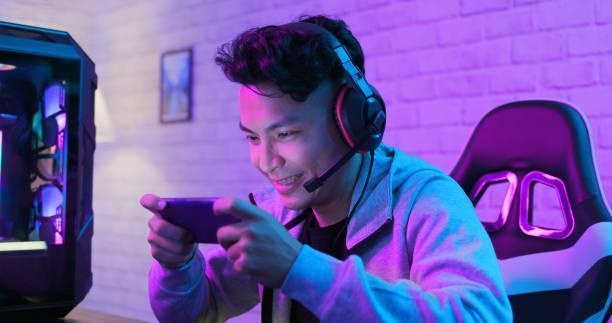
For years, competitive gaming was closely tied to powerful PCs, dedicated monitors and expensive peripherals. That picture is changing quickly.
Mobile esports has developed into a serious competitive category with professional teams, organised tournaments and audiences that increasingly treat smartphone gaming as more than a casual pastime. The shift is not replacing PC esports, but it is changing what competitive gaming can look like and who can take part.
Accessibility is changing the competitive landscape
One of mobile gaming’s biggest advantages is obvious: the hardware is already in people’s pockets.
A competitive PC setup can require a significant investment. Smartphones, by comparison, are already part of everyday life for millions of players. That lower barrier gives mobile games access to a much broader pool of potential competitors.
It also changes how players discover competitive titles.
Someone does not need to build a gaming rig or research graphics cards before getting started. They can download a game, learn its mechanics and begin competing from the same device they use for messaging, streaming and social media.
That simplicity matters in markets where mobile-first internet habits are common.
For younger players in particular, the smartphone is not a secondary gaming device. It may be the main screen they use for entertainment.
This has created a competitive ecosystem that feels different from traditional PC esports. It is often faster to enter, easier to share socially and more closely connected with everyday digital habits.
Mobile competition is becoming more sophisticated
The idea that mobile esports is somehow less serious than PC competition is becoming harder to defend.
Top mobile games now require fast reactions, tactical awareness, team coordination and detailed knowledge of game systems. Players train for specific roles, study opponents and adapt strategies in ways that closely resemble established esports scenes.
The surrounding infrastructure is also becoming more professional.
Teams are investing in coaching, performance analysis and structured practice. Tournament broadcasts are improving. Developers are designing spectator features with competition in mind rather than treating esports as an afterthought.
The technical side has improved too.
Modern smartphones can handle increasingly complex games while faster networks make real-time multiplayer experiences more reliable. Better displays, stronger processors and more responsive controls have narrowed the performance gap that once separated mobile gaming from other platforms.
That does not mean the experiences are identical. PC gaming still offers advantages in precision, customisation and hardware flexibility.
But mobile no longer needs to imitate PC esports to be taken seriously. It is developing its own competitive identity.
Gaming habits are becoming more flexible
Mobile esports also reflects a wider change in how people use digital entertainment.
Players no longer separate gaming into neat categories. The same person may watch a tournament on a laptop, play a competitive match on a phone and later explore other forms of online entertainment.
That wider digital behaviour affects how gaming platforms are designed.
People expect quick registration, smooth payments and simple mobile navigation across almost every type of online service. They are also more conscious of privacy and identity checks than they were a few years ago.
That is why discussions around options such as καζινο χωρις ταυτοποιηση can appear alongside broader conversations about friction, account access and digital convenience. The underlying expectation is similar: users want platforms to feel secure without making the experience unnecessarily complicated.
For Greek players, this is particularly relevant because mobile use increasingly shapes how entertainment is consumed. The device is often the first point of contact with a gaming platform rather than a simplified version of a desktop experience.
That has pushed developers to think mobile-first rather than treating phones as an extension of the main product.
PC esports still has important advantages
None of this means the PC gaming hierarchy is about to disappear.
Many of the world’s most established competitive titles were built around keyboard and mouse controls. They have deep tournament histories, large communities and professional ecosystems that have taken years to develop.
PC hardware also allows for a degree of optimisation that mobile devices cannot fully match.
What is changing is the assumption that serious esports must begin there.
Mobile competitive gaming can reach audiences that traditional esports struggled to access. It can grow rapidly in regions where smartphones are widespread but high-end gaming hardware is less common.
The two formats may therefore expand alongside each other rather than compete for exactly the same audience.
There are already clear differences in how they are consumed:
- PC esports tends to attract players who invest heavily in dedicated gaming setups
- mobile esports makes competitive play easier to access from almost anywhere
- mobile titles often connect naturally with short-form content and social platforms
- PC scenes usually benefit from longer-established competitive structures
Those distinctions give each format room to develop.
The hierarchy is becoming less important
The more interesting question may no longer be whether mobile esports can overtake PC gaming.
Competitive gaming is becoming too broad for a single platform to define the entire industry. PC, console and mobile communities can all support serious competition while appealing to different types of players.
Mobile esports has already proved that a device once associated mainly with casual gaming can support demanding competitive scenes.
Its biggest advantage is not that it can copy the PC model. It is that it can bring esports to people who may never have entered that model in the first place.
As smartphones continue to improve, the old hierarchy is likely to matter less. What counts will be the quality of the game, the strength of the competition and whether audiences believe the contest is worth watching.